When you shop for tires, you’ll notice an overwhelming amount of information on the sidewall: size, load index, speed rating, and sometimes a mysterious note like “10-ply rated.” If you’ve ever wondered what tire ply ratings mean, you’re not alone. Many drivers confuse ply ratings with the actual number of plies in a tire, but the truth is a little more nuanced.
Understanding tire ply ratings is crucial for choosing the right tire for your vehicle. It affects not only safety but also load capacity, handling, and ride comfort. Whether you’re hauling heavy loads in your truck, towing a trailer, or simply trying to make sense of the numbers on your sidewall, this guide will walk you through everything you need to know.
What Are Tire Ply Ratings?
In the early days of tires, the sidewalls and tread were reinforced with layers (or “plies”) of cotton fabric. The more plies a tire had, the stronger it was. A “10-ply” tire literally contained 10 layers of cotton cord.
When it comes to vehicle maintenance, few questions come up as often as “How long do tires last?” Tires are one of the most important components of your car—they’re literally the only parts in direct contact with the road. Knowing when to replace them isn’t just about saving money, it’s about ensuring safety, performance, and peace of mind.
In this guide, we’ll cover everything you need to know about tire lifespan: how long they typically last, the factors that affect longevity, how to inspect them for wear, and when replacement becomes non-negotiable. We’ll also explain how you can replace your tires affordably with easy financing options from Dan the Tire Man.
Average Tire Lifespan: The General Rule of Thumb
Most drivers can expect their tires to last between 3 to 6 years or 40,000 to 75,000 miles, depending on the type, brand, and how well they’re maintained. That’s a wide range, and here’s why:
All-season tires often last the longest—up to 70,000 miles if cared for properly.
When it comes to the anatomy of a tire, most people focus on tread patterns, sidewall strength, or load ratings. But there’s one critical part of the tire that often gets overlooked — and without it, your tire couldn’t even stay on the rim. This essential component is called the tire bead.
If you’ve ever wondered what tire beading is, how it works, or why it matters, this guide will walk you through everything you need to know. Whether you’re a casual driver, an off-road enthusiast, or a professional trucker, understanding tire beads can help you make better tire choices, improve safety, and even save you money in the long run.
What Is a Tire Bead?
The tire bead is the part of the tire that sits directly on the wheel’s rim, forming an airtight seal that holds the tire in place. It’s made from high-strength steel wire encased in a thick, reinforced rubber compound.
This bead is not just a random edge — it’s engineered to grip the wheel under extreme forces, from sharp turns to high-speed
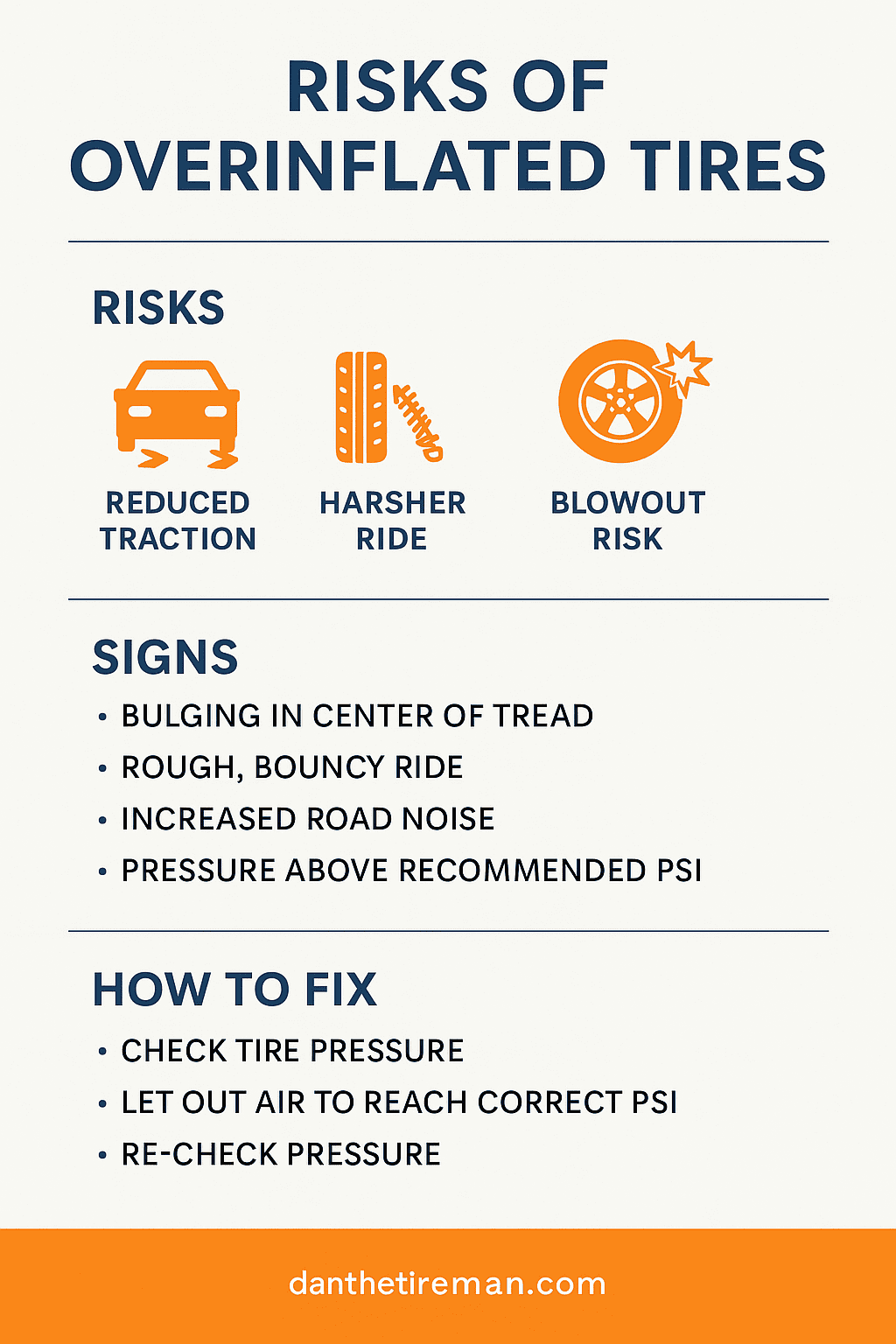
When it comes to tire maintenance, most drivers are careful about avoiding underinflation. We’ve all heard how driving on low-pressure tires can hurt fuel economy, slow down handling, and chew through tread faster. But what about the opposite problem? Are overinflated tires safe to drive on?
The short answer: No. The dangers of overinflated tires can be just as serious as underinflation — sometimes more so. An overinflated tire may give you a slightly firmer ride or even a tiny boost in fuel economy, but it comes with trade-offs in safety, traction, and comfort that simply aren’t worth it.
In this guide, we’ll explore what overinflation really means, the dangers it poses, common causes, and how to keep your tire pressure exactly where it should be.
What Does “Overinflated” Mean?
Every vehicle comes with a manufacturer-recommended PSI (pounds per square inch) for the tires. This isn’t a suggestion — it’s a tested number designed to balance safety, performance, and longevity. You can
If you’ve ever shopped for new tires or browsed tire sidewalls, you’ve probably seen the letter “R” in a size like P215/65R17 and wondered what it means. That “R” stands for radial, which describes how the tire is constructed—and radial tires are by far the most common type of tire on the road today.
But what exactly is a radial tire, and why does it matter to you as a driver?
At Dan the Tire Man, we’re here to break it all down for you. Whether you're upgrading to high-performance tires, replacing your worn-out set, or just brushing up on tire tech, this guide will help you understand radial tires and why they’ve become the gold standard in modern tire design.
What Is a Radial Tire?
A radial tire is a type of pneumatic (air-filled) tire in which the internal construction includes cord plies (usually made of polyester, nylon, or steel) that are arranged radially, meaning perpendicular to the direction of travel, from bead to bead.
When it comes to driving comfort, one of the most underappreciated factors is tire noise. Sure, we focus on ride quality, fuel efficiency, and durability—but excessive road noise can actually cause stress, fatigue, and decrease overall enjoyment behind the wheel. Whether you’re commuting in busy city traffic, cruising on the highway, or enjoying the whisper-quiet cabin of an electric vehicle, choosing the right quiet tires can transform your daily drive.
In this article, we’ll break down:
What makes a tire quiet (and why it matters),
Which tires currently rank among the quietest,
Key technologies and design features that reduce noise,
How to match your driving needs to a quiet tire,
And a few tips to keep ride noise down over the life of your tires.
Why Choose Quiet Tires?
Tire noise, especially pattern and cavity noise, becomes most noticeable between roughly 30 km/h and 100 km/h. With electric vehicles eliminating engine roar at lower speeds, tire noise jumps out even
A flat or damaged tire can throw your whole day off. Whether it's a slow leak or a nail puncture, knowing when to repair a tire, and when it must be replaced, is critical to your safety, budget, and peace of mind.
At Dan the Tire Man, we’ve been helping drivers across America make the right tire decisions since 2015. With $0–$49 down payment options, no hard credit checks, and free shipping, we’re here to get you rolling again—safely and affordably.
In this article, we’ll walk you through:
The differences between patching, plugging, and combination repairs ● When a tire can be safely repaired
Situations when a tire should never be repaired
The pros and cons of each repair method
What the U.S. Tire Manufacturers Association (USTMA) recommends
Common mistakes to avoid
When replacement is your safest bet
Let’s dive in.
What’s the Difference Between a Plug and a Patch?
A plug is a rubbery stem inserted from the outside of the tire into the puncture hole. It seals the leak and
When it comes to buying new tires, there’s more to consider than just size and price. One of the most overlooked—but incredibly important—factors is the treadwear rating. This simple number can tell you a lot about how long a tire is expected to last and how it performs under various conditions.
In this article, we’ll break down:
What a treadwear rating is
How it’s measured
What the numbers actually mean
How treadwear ratings affect your driving experience and wallet
Common myths and misconceptions
How to use this information when shopping for tires online at Dan the Tire Man Let’s dive in!
What Is a Tire Treadwear Rating?
A treadwear rating is part of the Uniform Tire Quality Grading (UTQG) system, which is mandated by the U.S. Department of Transportation (DOT). You’ll typically find it on the tire’s sidewall along with two other ratings: traction and temperature.
The treadwear number gives a relative indication of how long the tire’s tread is expected to last compared
Get instantly approved through Dan the Tire Man's No Credit Needed Program (Powered by Kafene), and Snap Finance. Apply now and come back ready to shop with your approval in hand.
Browse our full selection of tires, wheels, and motorcycle gear. Add to cart and check out using your approval—or choose a credit card, Affirm, or other payment method at checkout.