


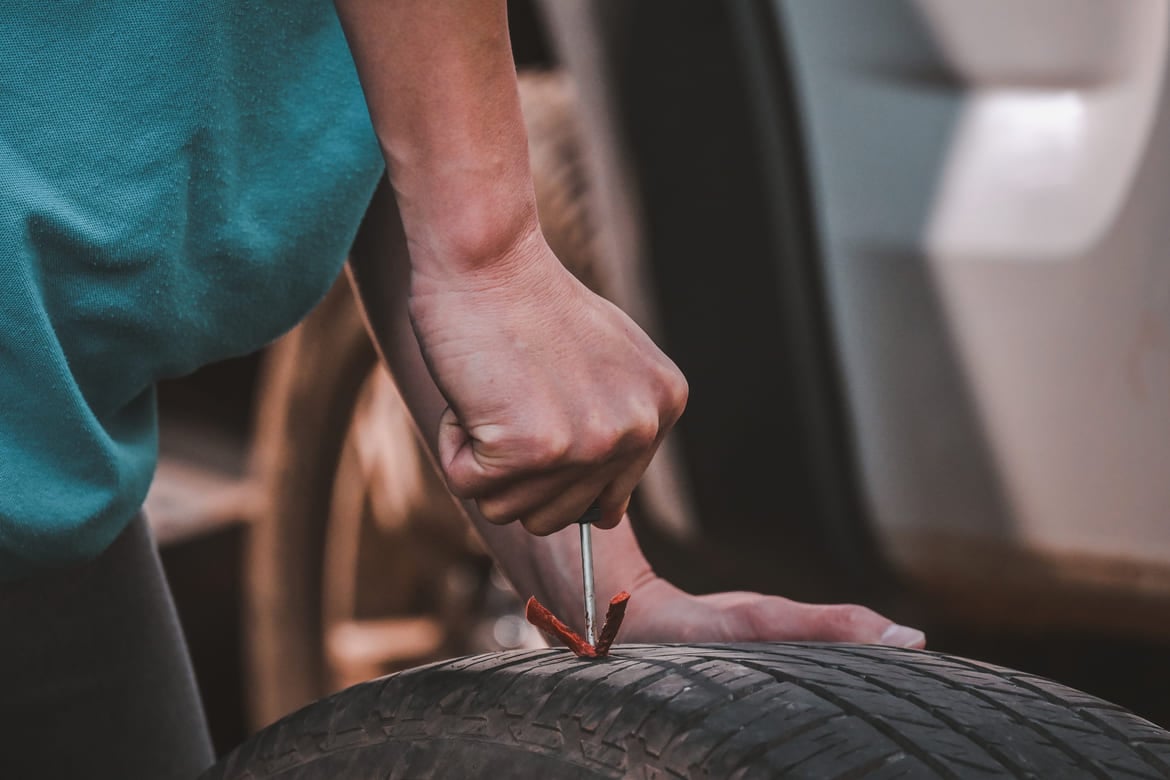
A flat or damaged tire can throw your whole day off. Whether it's a slow leak or a nail puncture, knowing when to repair a tire, and when it must be replaced, is critical to your safety, budget, and peace of mind.
At Dan the Tire Man, we’ve been helping drivers across America make the right tire decisions since 2015. With $0–$49 down payment options, no hard credit checks, and free shipping, we’re here to get you rolling again—safely and affordably.
In this article, we’ll walk you through:
- The differences between patching, plugging, and combination repairs ● When a tire can be safely repaired
- Situations when a tire should never be repaired
- The pros and cons of each repair method
- What the U.S. Tire Manufacturers Association (USTMA) recommends
- Common mistakes to avoid
- When replacement is your safest bet
Let’s dive in.
What’s the Difference Between a Plug and a Patch?
A plug is a rubbery stem inserted from the outside of the tire into the puncture hole. It seals the leak and keeps air in. Plugs are typically quick, inexpensive, and used when the damage is small and centrally located.
A patch is a flat piece of rubber cemented to the inside of the tire. It requires dismounting the tire and is considered more durable and reliable than a plug alone.
A combination repair (plug + patch) is the gold standard. It seals both the outside and the inside of the tire, restoring structural integrity and long-term performance.
When Is It Safe to Repair a Tire?
You can typically repair a tire safely if the damage:
- Is a puncture 6mm (1/4 inch) or smaller
- Is located in the center tread area (not on the shoulder or sidewall)
- Has not caused internal damage like bulges or tread separation
- Is not overlapping with a previous repair
- Is not part of multiple punctures too close together
If these conditions are met, you’re in the clear for a repair, saving you time and money.
When You Should Not Repair a Tire
No matter how tempting it is to save money, do not attempt a tire repair if:
- The sidewall or shoulder is damaged
- The puncture is larger than 1/4 inch
- The tire has been driven while flat
- You notice visible cords, bubbles, or tread separation
- There are multiple punctures less than 16 inches apart
- The tire has less than 2/32" tread depth left
In any of these situations, a tire repair is unsafe and may fail unexpectedly. Replacement is the only safe option.
Pros and Cons of Plugging a Tire
✔️ Pros:
- Fast and cheap
- Can often be done without removing the wheel
- Good for temporary or emergency fixes
❌ Cons:
- Less reliable long-term
- Doesn’t seal inner liner damage
- Not recommended for punctures near sidewalls or larger holes
Pros and Cons of Patching a Tire
✔️ Pros:
- More secure seal from the inside
- Better for long-term durability
- Can identify internal damage when tire is removed
❌ Cons:
- Requires tire removal
- More time-consuming
- Can cost more in labor
Why the Combination Plug + Patch Is Best
The U.S. Tire Manufacturers Association (USTMA) and Tire Industry Association (TIA) both recommend using a patch-plug combo for puncture repairs. Here’s why:
- The plug seals the puncture path
- The patch seals the inner liner
- The technician inspects the tire for internal damage during dismounting
It’s the safest, most thorough way to ensure the puncture doesn’t reopen later at high speeds.
How Tire Repair Is Done (Step by Step)
If you take your tire to a trusted shop, here’s how a proper repair is typically performed:
- Remove the tire from the wheel
- Inspect the damage—inside and out—for separation or structural issues
- Buff and clean the inner liner around the puncture
- Apply rubber cement
- Insert a combination plug/patch
- Cure the patch if necessary
- Remount and balance the tire
Note: Dan the Tire Man doesn’t perform physical repairs, but we can help you get a replacement tire fast if the damage isn’t repairable!
DIY Plug Kits: Are They Safe?
You’ve probably seen $10–$20 plug kits at auto parts stores. Should you use one?
✅ **Yes**for a short-term fix when you're stranded or can’t get to a shop right away
❌ **No**as a long-term solution, especially on high-speed or heavily loaded tires
Never plug a sidewall or large hole, and be sure to check the tire ASAP for internal damage at a repair facility.
Common Mistakes to Avoid
- Plugging a tire with sidewall damage – unsafe and illegal in some states
- Using sealants like Fix-a-Flat as a permanent solution – these are temporary
- Ignoring slow leaks – can lead to flat tires, rim damage, or blowouts
- Patching tires without inspecting for belt/tread separation – dangerous
- Failing to rebalance the tire – leads to vibration, uneven wear
When in doubt, get a second opinion or shop for a replacement tire on our site with easy financing!
Can You Repair a Tire More Than Once?
Yes, but only under these conditions:
- Repairs are at least 16 inches apart
- The tire is not overloaded
- The overall tire integrity is intact
- No previous sidewall or belt damage
USTMA recommends no more than 2 repairs per tire, but some shops are stricter.
Tire Repair vs. Replacement: What’s the Cost Difference?
|
Option |
Estimated Cost |
|
Tire Plug |
$15–$30 (basic plug kit or shop) |
Tire Patch |
$20–$40 |
|
Plug + Patch Comb |
$30–$60 |
|
New Tire (Passenger) |
$100–$200+ per tire |
|
New Tire (LT/AT/SUV) |
$150–$350+ per tire |
Want to replace your tire affordably?
We offer $0–$49 down payment options, no hard credit checks, and free shipping at DanTheTireMan.com.
Weather Considerations
If you're driving in extreme weather, snow, heat, or rain, don’t risk a plug-only repair. Rubber expands and contracts with temperature changes, which can compromise basic plug jobs.
A combination repair or tire replacement is always safer when weather is unpredictable.
Truck and Trailer Tires
If you drive an RV, trailer, or light truck, here’s what to keep in mind:
- These tires often operate under heavier loads
- Even a small puncture can become a blowout
- It’s usually safer to replace rather than repair if any doubt exists
How Dan the Tire Man Can Help
If your tire isn’t safe to repair, we’ve got you covered:
✅ Passenger, Light Truck, ATV, and Trailer Tires
✅ $0–$49 to Get Started with no hard credit check
✅ Fast Free Shipping Nationwide
✅ Top brands and hard-to-find sizes
Visit www.danthetireman.com to search by size or vehicle. Call or text us at 207-316-2258 for help choosing the right tire.
Know When to Repair and When to Replace
Tire repairs can be a great money-saver, but only when done correctly and under the right conditions. Never gamble with your safety or your family’s.
Remember:
- Plug = temporary
- Patch = stronger
- Plug + Patch = best
- Sidewall or large puncture = replace
Still unsure? Our team at Dan the Tire Man is ready to help. We’ve been trusted online since 2015, and we’ll never steer you wrong.