 Family Owned & Operated


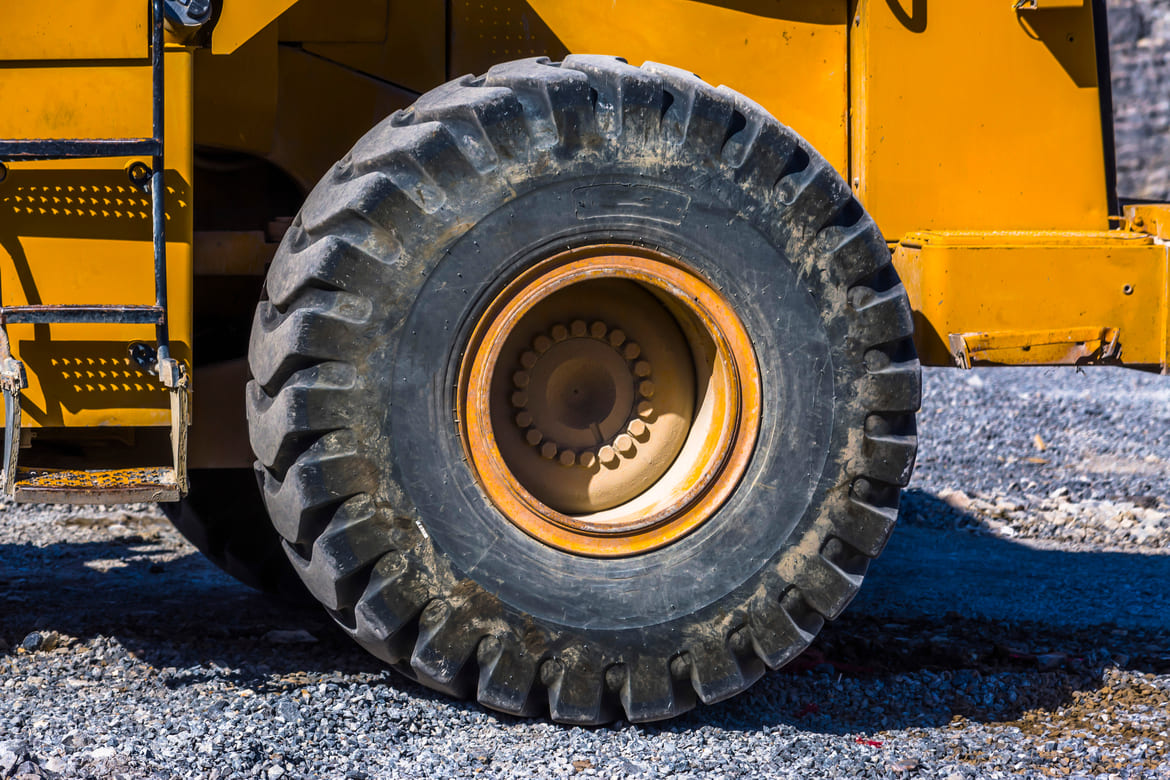
If you run a farm, operate heavy equipment, or manage a construction or mining fleet, you already know that the rubber under your machines matters as much as the iron above it. The wrong tire costs you traction, tonnage, and time. The right one keeps you moving through mud, rock, loose soil, and uneven terrain without slowing the operation down.
At Dan the Tire Man, we stock and source OTR tires, agricultural tires, flotation tires, construction tires, mining tires, and industrial tires across every major brand and category. This guide walks you through what you need to know before you buy.
What Are OTR Tires?
OTR stands for "off-the-road," and it covers a wide range of applications that never touch a paved highway. Agricultural tires, construction tires, mining tires, and most industrial tires all fall under the OTR umbrella. These tires are built for environments that would destroy a standard passenger or commercial highway tire in short order: compacted dirt, loose aggregate, deep mud, rock fields, and haul roads with no grading or maintenance.
OTR tires are engineered with thicker sidewalls, deeper tread blocks, and reinforced carcasses that absorb impact and resist puncture. Tread patterns range from smooth flotation designs to aggressive open-shoulder lug patterns, depending on whether the priority is carrying weight across soft ground or gripping rock and hard pack.
Agricultural Tires: Tractor Tires, Combine Tires, Flotation Tires, and Implement Tires
The ag tire category covers more ground than most people expect. If it works a field, it needs the right rubber.
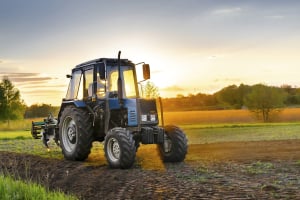
Tractor tires are the most common ag tire purchase. Row crop tractors typically run a rear drive tire in sizes like 18.4-38, 20.8-38, 480/80R42, or 520/85R46, with narrower fronts like 11.2-24 or 320/85R24 for row clearance. Four-wheel drive utility tractors commonly use 18.4-30 or 16.9-30 on all four corners.
Combine tires take serious weight. A loaded combine can push 60,000 pounds or more, and the tires need to carry that without compacting the soil or sinking into wet ground at harvest. Common rear sizes include 800/65R32 and 900/60R32. Combine fronts typically run 600/65R28 or 650/65R38.
Flotation tires are designed to spread load across a wider footprint, reducing soil compaction on wet or sandy ground. You'll see them on sprayers, grain carts, and manure spreaders. Sizes like 380/90R46, 480/70R34, and IF480/80R50 are common. The wider the tire, the less pressure per square inch on the soil surface.
Implement tires cover everything towed behind the tractor: planters, disc harrows, cultivators, hay rakes, and grain carts. These run in smaller sizes, often bias-ply, such as 11L-15, 7.50-16, and 9.5L-15. They carry weight but don't need the traction profile of a drive tire.
Construction Tires: What You're Actually Buying
Construction tires cover loaders, graders, scrapers, backhoes, telehandlers, and compactors. Each machine has a specific tire requirement based on load rating, speed rating, tread type, and whether the machine operates primarily on hard surface, soft dirt, or mixed terrain.
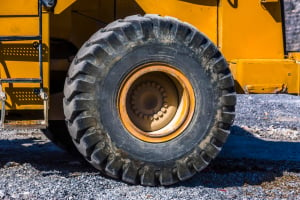
Loader tires are among the most replaced construction tires in the country. A standard articulated wheel loader like a Cat 950 or Komatsu WA380 typically runs 20.5R25 or 23.5R25. Larger loaders move up to 26.5R25 or 29.5R25. These tires take constant abuse from rocks, rebar, and debris, and tread life is the number one purchasing consideration for fleet managers.
Motor grader tires see a lot of hard-surface work, which demands a different compound than soft-ground tires. Common sizes include 14.00-24 and 17.5R25. Scrapers typically run 26.5R25 on the rear and 23.5R25 on the front. Telescopic handlers and rough terrain forklifts often run 12-16.5 or 10-16.5 in either foam-filled or solid construction for puncture-free operation in debris-heavy environments.
The tread pattern on a construction tire matters. An L-2 lug pattern gives better traction on loose material. An L-3 rock tread offers more protection against cuts and chips in rocky terrain. An L-5 pattern is a solid or near-solid tread block for maximum cut resistance in severe rocky applications. Most fleet managers buying for mixed conditions default to L-3.
Mining Tires and Industrial Tires
Mining tires are the largest and most expensive tires in the OTR world. An ultra-class haul truck running a Komatsu 960E or Caterpillar 797F rides on 59/80R63 tires that can weigh over 12,000 pounds each and carry loads in excess of 400 tons. Smaller mine trucks running in 40-ton to 100-ton class typically use 27.00R49 or 33.00R51.
For surface mining operations at smaller scale, the dump truck tires you need are often the same sizes used in heavy construction: 26.5R25, 29.5R25, or 35/65R33. The distinction at this level is primarily in the tread compound and ply rating rather than the size.
Industrial tires cover a broad range of material handling applications: terminal tractors, port equipment, large forklifts, and airport ground support vehicles. Common industrial tire sizes include 8.25-15, 10.00-20, and 11.00-20 for larger warehouse and yard machines. Solid and foam-filled options are common in environments where downtime from a flat is unacceptable.
Open Shoulder vs. Closed Shoulder Tires: What's the Difference?
You'll hear these terms when shopping for ag tires and construction tires, and the difference is straightforward but important.
Open shoulder tires have large gaps between the tread lugs that continue to the edge of the tire. This design evacuates mud and soft material from the contact patch, giving the tire continuous grip in loose or wet conditions. Open shoulder tires are the standard choice for tractors working in row crops, heavy clay soils, and muddy field conditions.
Closed shoulder tires have a continuous rib or closely spaced lugs at the tire shoulder with no open voids. This gives a smoother ride on hard surfaces, better road handling, and longer tread life in dry or hard-pack conditions. Closed shoulder designs are common on tires that split time between field work and road transport, as well as on most construction and industrial tires where road travel is frequent.
What Size Do You Need?
OTR and ag tire sizing uses a mix of older inch-based sizing and metric radial sizing depending on the application and tire age. If you have the old tire in front of you, the size is molded into the sidewall. If you are speccing a replacement for a machine you haven't received yet, the operator's manual is your source.
When in doubt, call us. Dan has over 40 years in the tire industry and can match a size to a machine fast, including cross-referencing older bias-ply sizes to modern radial equivalents when an upgrade makes sense.
Why Buy OTR and Ag Tires from Dan the Tire Man?
We are not a big box store guessing at what a combine tire is. We source from brands including BKT, Alliance, Titan, Firestone, Michelin, Goodyear, Samson, Carlisle, and Specialty Tires of America. We carry size ranges most regional dealers do not stock, and we can drop-ship direct to your farm, job site, or equipment dealer.
Whether you need a single replacement flotation tire for a grain cart or a full set of loader tires for a construction fleet, we price competitively, ship fast, and answer the phone when you have a question.
Internal link opportunity: Link brand names individually to brand-specific category or landing pages if they exist on the site.
Browse our full selection of OTR tires and agricultural tires, or contact us directly with your machine make, model, and current tire size. We'll get you the right tire at the right price.